
It feels like everywhere you look, people are talking about layoffs, rising prices, stubborn inflation, and the possibility of another recession. Whether the economy officially slips into one or not, a lot of people are already feeling the squeeze.
If you’re living paycheck to paycheck, worried about your job, or wondering how you’ll handle another economic shock, you’re not alone. It’s a difficult time, and for many families, the margin for error has never felt smaller.
I’ve been thinking a lot about what I can do today to put myself in the best possible position if things get worse. Not because I enjoy doomscrolling economic forecasts, but because I’ve learned that it’s much easier to prepare before you need to than after you’re already in survival mode.
None of us can control what the economy does. We can’t stop companies from laying people off. We can’t control inflation, interest rates, or the stock market. But we can control how prepared we are.
This isn’t meant to be fearmongering or a prediction that disaster is around the corner. I’m simply sharing the steps I’m taking to strengthen my financial position, protect my income, and give myself more options if the economy takes a turn for the worse.
Hopefully, some of these ideas will help you do the same.
Step 1: Secure Your Cash Flow & Emergency Fund
Boost your emergency savings: Aim to bump your emergency fund up to 3 to 6 months (or even 9–12 months if your industry is volatile) of essential living expenses.
Prioritize liquidity: Keep your emergency fund in high-yield savings accounts (HYSAs) or money market funds where it is safe and easily accessible, rather than locked in long-term investments.
Step 2: Audited and Trimmed My Budget
Differentiate “needs” vs. “wants”: Audit your bank statements and ruthlessly cut back on discretionary spending (e.g., unused subscriptions, premium streaming services, frequent dining out).
Create a “bare-bones” budget: Know exactly what your minimum monthly survival number is (rent/mortgage, utilities, basic groceries, insurance) in case of a sudden job loss.
Get back to basics: Food, Clothing, Transportation, Communication
Step 3: Reducing My Debt Where Possible
Target high-interest debt: Pay off high-interest toxic debt, like credit cards or personal loans, as fast as possible. High interest rates eat away at your cash flow when you need it most.
Lock in fixed rates: If you have variable-rate debt, look into consolidating or refinancing into fixed-rate options to avoid unpredictable monthly payment hikes.
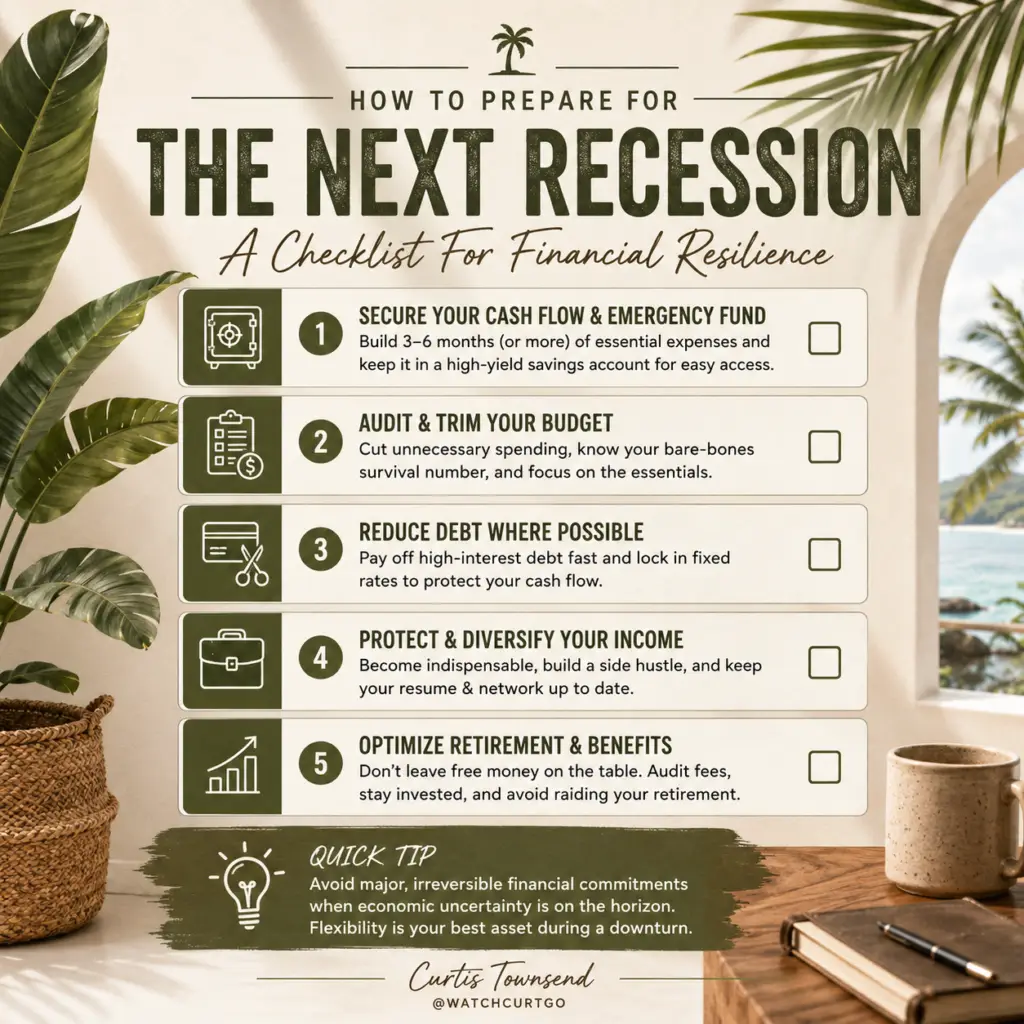
Feeling Uneasy About The Economy?
Prepare today so you’re ready for tomorrow. This simple, actionable checklist walks you through the exact steps I’m taking to strengthen my finances, protect my income, and build resilience before the next economic downturn.
Step 4: I'm Protecting and Diversifying My Income
I am 100% self-employed so I don’t have the luxury of a steady income but here are a actionable strategies you can take to weather the next economic storm:
Become indispensable at work: Focus on high-visibility projects, solve critical problems for your employer, and document your achievements to reduce your vulnerability to layoffs.
Build a side hustle: Diversify your income streams. A secondary source of income—even a small one—provides a vital safety net if your primary income drops.
Update your resume: Keep your resume, portfolio, and LinkedIn profile current. Networking should be an ongoing habit, not something you start after losing a job.
Step 5: Optimize Retirement Accounts & Workplace Benefits
Don’t leave free money on the table: If money gets tight, try your best not to lower your 401(k) or 403(b) contributions below the employer match threshold. That match is a guaranteed 100% return on your investment, which is crucial during a down market.
Avoid the retirement account “piggy bank” trap: Steer clear of taking out 401(k) loans or making early withdrawals to cover everyday expenses. Not only does this lock in market losses, but it can also trigger heavy tax penalties and stunt your long-term compounding growth.
Audit your plan’s fees: Look closely at the expense ratios of the mutual funds within your employer-sponsored plan. Switching from actively managed funds to low-cost index funds can save you thousands of dollars over time—money that stays in your pocket during a recession.
Final Thoughts
Whether you are managing a portfolio or simply trying to get back on your feet, the goal of weathering a recession is exactly the same: survival and peace of mind.
You don’t need a massive investment account to protect yourself; you just need a plan, a willingness to protect your income, and the flexibility to adapt. Secure your perimeter today, stay calm, and remember that even the roughest storms eventually run out of rain.
What’s your number one priority for securing your personal financial sanctuary this week? Let me know in the comments below!
💡 Quick Tip: Avoid making major, irreversible financial commitments—like buying a luxury car or taking on a massive new mortgage—if you foresee economic instability in your industry. Flexibility is your best asset during a downturn.